
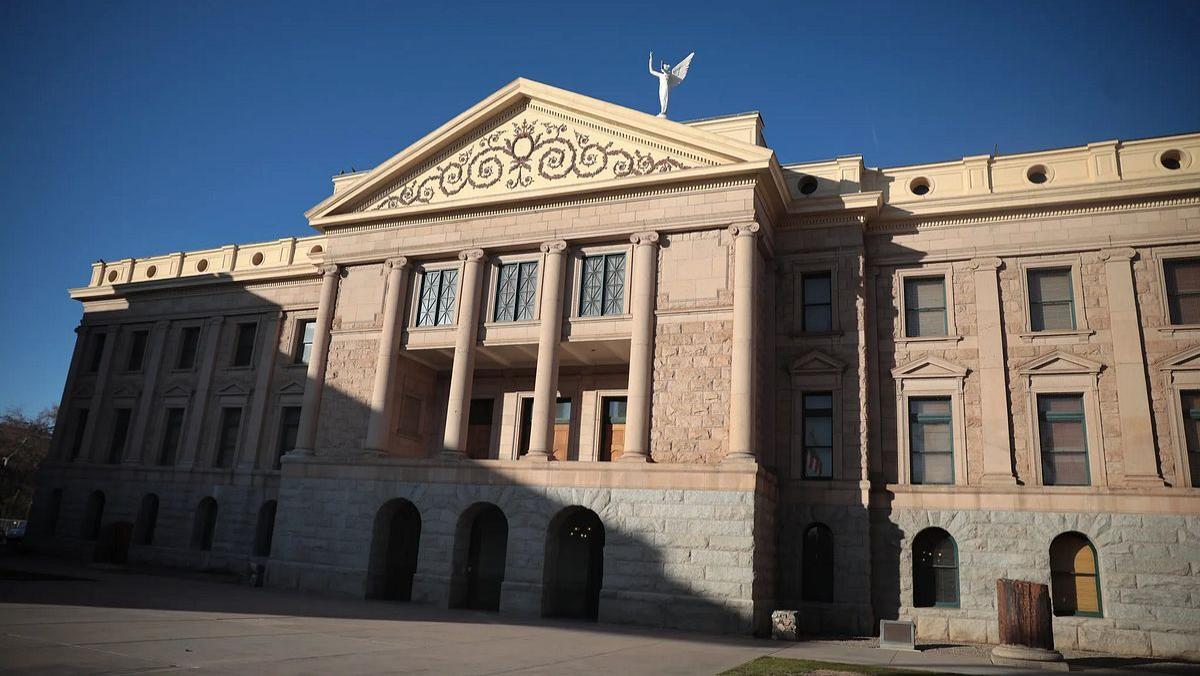
(The Center Square) – For the first time since 2012, one party will have a supermajority in the Arizona Senate when the body reconvenes next year.
The difference is that the Republicans will not be the party to hold such a margin in the 30-seat body, with Democrats taking a 20-10 advantage into 2027.
The flip represents Democrats’ first supermajority (or holding 20 or more seats in the Senate) since 1966, when they held a 24-4 lead in the then-28-seat chamber.
It also represents the party’s first majority in the state Senate since Democrats held a 17-13 edge over the GOP from 1990 to 1992. The Democratic Party also controlled the 30-member chamber from 1976 to 1978 (16-14) and from 1974 to 1976 (18-12).
In 2027, the Democrats’ first majority in the chamber in a quarter-century will see them hold a comfortable margin over the minority party.
On Monday, the woman who was elected president of the Senate, Priya Sundareshan, told The Center Square that there’s plenty of work to be done once the opening gavel sounds on Jan. 11.
For now, the newly-elected Democratic Senate president from Tucson said her caucus is united on delivering its campaign promises from day one, serving the people that put them in the Capitol.
“It's exciting, really, to have the opportunity to not only earn a Democratic majority and able to deliver to our voters everything that we have been talking about and serving them to address the issues facing them, but also to be in that position of leadership to make sure that we are united as a caucus in doing so,” Sundareshan told The Center Square Monday.
Democratic objectives in the Senate
Sundareshan said she is confident that the 20-person Democratic supermajority in the Senate will have the votes needed to pass bills aimed at bringing down the cost of living in the state, while tackling front-of-mind issues such as Colorado River water access, healthcare costs and public education spending.
“It is about protecting our water and our air, so that we have an Arizona that we can live in going into the future,” Sundareshan said.
The Tucson Democrat also expressed confidence that the caucus and their peers in the state House will come up with solutions that won’t raise taxes for average Arizonans, starting with cutting the tax breaks (like the state’s flat tax rate) that she said overwhelmingly benefit the state’s wealthiest residents and corporations/
“Our focus is going to be on, one, taking a look at existing revenue that has been dramatically cut over the years,” Sundareshan said. “So we already know that the current revenue structure is unfairly balanced. So nothing would increase the burden on the lowest income earners.
“So we'll be taking a look at existing revenue, taking a look at what programs we are funding currently that are not Democratic priorities, so that see what we can shift to ensure that programs that do support the vast majority of Arizonans are better funded," she said.
Sundareshan did not say which programs her caucus would target specifically, though she did express confidence that Democrats would put forth a budget that meets the state’s public education obligations.
Those obligations include Proposition 123, which was passed by voters in 2016, increasing distributions from the State Land Trust Permanent Fund to public K-12 education from the old rate of 2.5% to 6.9% per year.
According to Sundareshan, Republican leadership failed to live up to the state’s educational funding mandates, which is something her caucus will address as soon as they get control of the state Senate next year.
“We know that's a funding stream we will be prioritizing, and then we'll have to take a broader look once we once we are in place and have access to the finer details of what is possible to ensure that corporations and the wealthiest who have skated on participating and paying their fair share of taxes, and instead putting all that burden on regular Arizonans, might end up being able to pay their fair share,” Sundareshan said. “But that would be a that would be a later project, I imagine, as we as we continue to have discussions.”
What GOP leaders are saying
In the state Senate next year, Sen. John Kavanaugh, R-Fountain Hills, who has served in the Arizona legislature since 2007 (including as majority leader from 2024 to 2026), will be the Senate' minority leader for the GOP in the 58th legislative session. Yuma native Tim Dunn will be the assistant minority leader and Leo Biasiucci will serve as minority whip.
On Monday, Kavanaugh told The Center Square that Republicans will do everything in their power to earn back the trust of voters and regain their majority in the Legislature.
"It was pure dissatisfaction with the economy and the war at the federal level. I mean, anybody with an R after their name paid the price," Kavanaugh told The Center Square. "People weren't looking at names. They weren't looking at local state policies or state officials. They were looking just to X out ours."
For now, the Senate minority leader said his 10-person caucus will do what it can to ensure that Arizonans' taxes don't increase and go from there.
"I think we need to point out the differences between us and the Democrats, especially based on the bills that they pass that that the voters will not like, and continue to give our low tax, limited government alternatives, and we'll see what happens next election," Kavanaugh said.
Sundareshan said she appreciates the fact that Senate Republicans, like Kavanaugh, are interested in working across party lines to solve Arizona’s water issues.
“I hope that is that is true because that's especially in that water space, that is one of those things that many of us — and I was right there in the middle of it — worked very hard with rural elected Republicans to put forward a rural water management program, and it never even got a hearing in in either chamber,” Sundareshan said. “So I'm glad to see that they're recognizing that failure to be responsive had had those consequences.
“So I look forward to when we do put those ideas forward, to see them help support us getting that across the finish line," she said. "I welcome their participation.”