
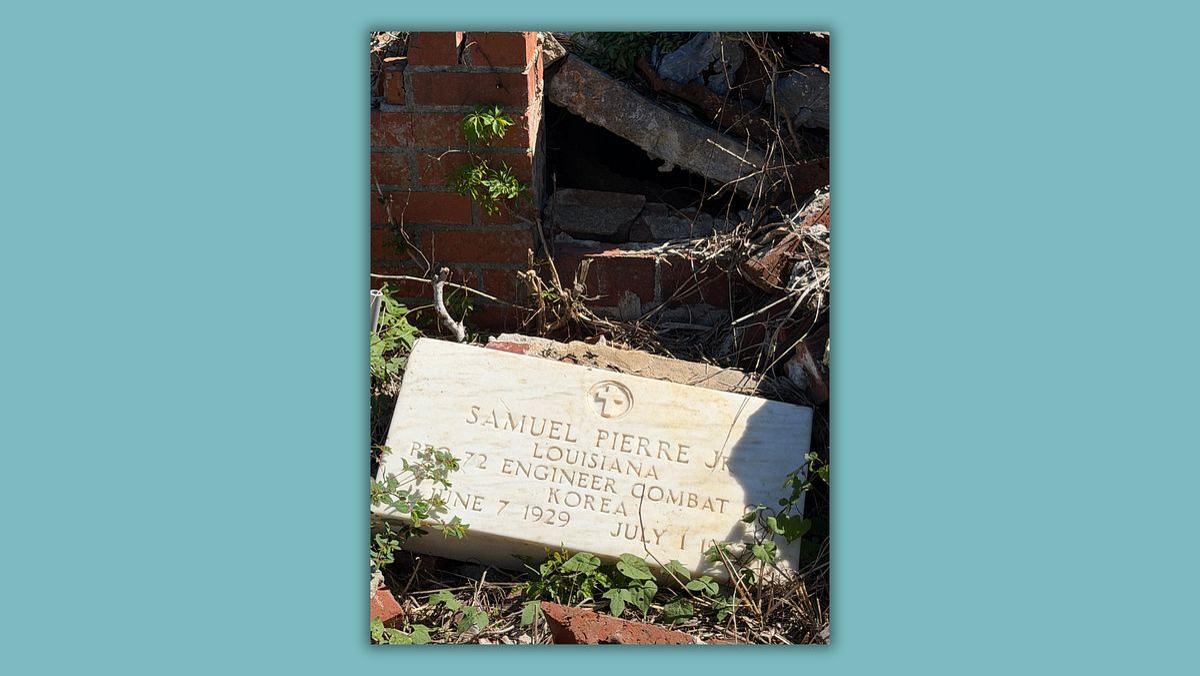
(The Center Square) – Louisiana officials received accounts of collapsing tombs at Sweet Olive Cemetery more than a decade before a veteran’s exposed casket brought renewed scrutiny to the Baton Rouge burial ground.
Correspondence from 2014 through 2017 obtained by The Center Square from the Louisiana Cemetery Board traces complaints about deteriorating graves, questions about burial fees, and a state regulator’s conclusion that it could not compel maintenance.
As previously reported by The Center Square, the Louisiana Department of Veterans Affairs said in October it was working with other agencies to repair the grave of Pfc. Samuel Pierre Jr. or relocate his remains after a brick structure collapsed, exposing his casket.
Pierre was 22 when he died in Korea in 1952, according to the department.
Veterans Affairs spokeswoman Daniele Palen previously told The Center Square that the department had not identified living immediate family members and that costs and funding would depend on the legal process.
Louisiana Cemetery Board Director Jerry Sullivan said ownership remained unresolved and Sweet Olive had been unlicensed since 2000 because no completed application meeting legal requirements had been submitted.
The older files document both preservation efforts and recurring problems.
In a Sept. 29, 2014, letter to Assistant Attorney General Ryan Seidemann, W.T. Winfield of Winfield Cemetery Stewards LLC thanked him for visiting the grounds. He said a vehicle-damage settlement paid for a mausoleum to enclose disturbed remains, without specifying the amount or number of people affected.
“We repaired the fence and continue to use every dollar we receive to repair tombs and vaults that continue to collapse with time,” Winfield wrote.
Winfield said his organization handled maintenance, management and interments. He reported fewer than 10 burials annually and a burial fee ranging from $500 to $1,000, excluding perpetual care.
On Dec. 16, 2014, then-Cemetery Board Director Lucy McCann questioned those charges, noting Sweet Olive held neither a certificate of authority nor an exempt certificate.
“What does the burial fee cover?” she asked.
McCann requested an exemption application and details about sales, deeds, ownership records, burial maps and interment records. A second notice, dated Jan. 20, 2015, said no response had arrived.
Families continued seeking help. In an October 2017 complaint, Mildred Jones Johnson said cleanup had not been sustained and described relatives buried there.
Responding to Johnson’s complaint, Winfield emphasized the difficulty of maintaining the site.
“The cemetery depends on the good faith efforts of volunteers and family descendants of those interred there,” he wrote.
Winfield’s letters described sheriff’s inmate crews clearing vegetation, students raking and bagging debris, and public works employees hauling trash. In December 2014, he reported a week of work by inmate crews. The documents contain no accounting of public costs.
On Nov. 29, 2017, McCann told Johnson that Title 8 of Louisiana’s Revised Statutes did not authorize the board to force cleanup of a nonperpetual care cemetery.
“While we understand your concerns, we have no legal authority to act in this situation,” she wrote.
The files do not establish what enforcement action, if any, followed the separate inquiry into certification and recordkeeping.