
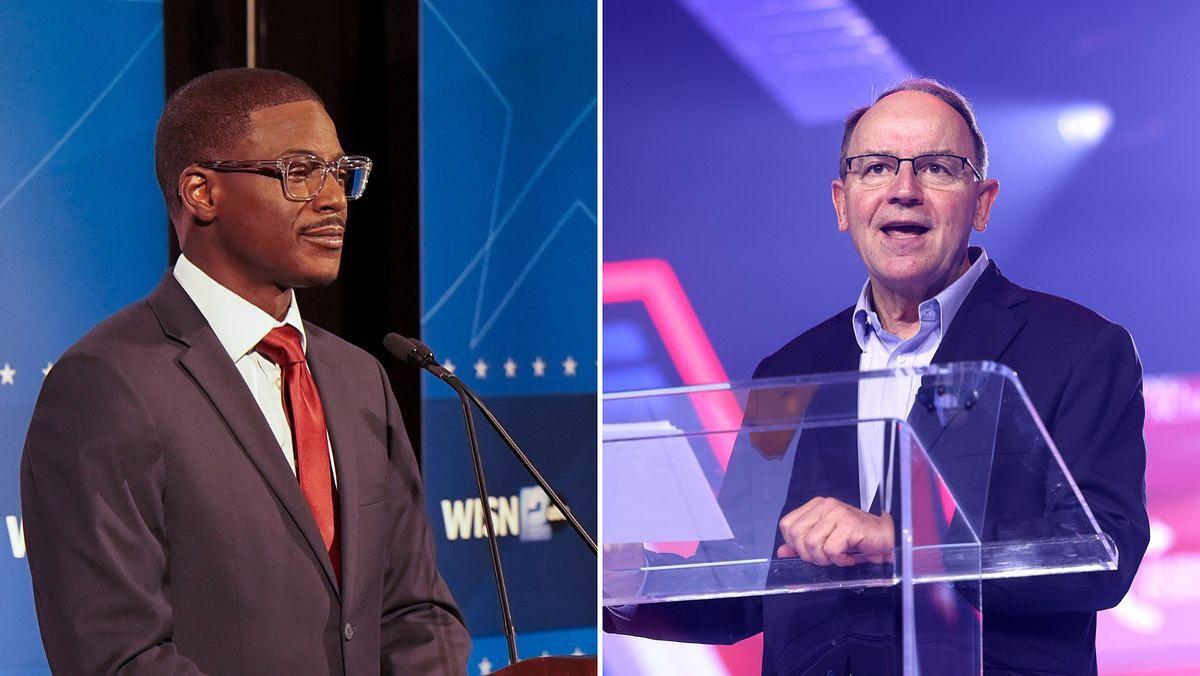
(The Center Square) – Both Wisconsin candidates for governor have moved closer to the same policy opinions on data centers as the campaign has progressed but a major difference in their policies has been the strategy to power them.
Democrat David Crowley has pushed requiring 100% renewable energy to power the data centers while Tiffany has said that is not feasible and would lead to the destruction of farmland for the wind and solar power along with battery storage.
“You take just the Mount Pleasant and Port Washington sites, it would take 100,000 acres of solar panels in order to power them,” Tiffany said during the pair’s only debate. “That’s crazy to do that. That’s going to raise our electricity rates but it’s also ultimately going to raise our food costs because it’s going to sideline some of our beautiful farmland here in Wisconsin.”
Crowley, meanwhile, said that Tiffany’s plan would be bad for the environment.
“Congressman Tom Tiffany, the last thing we need to do in terms of energy is to burn more coal, which is something you support,” Crowley said.
The two stumbled a bit when speaking of the non-disclosure agreements that data centers have used to hide plans until they are approved.
Tiffany is against the agreements, which Wisconsin comedian Charlie Berens has been outspoken about ending, but got tongue-tied while saying the words and WISN’s Matt Smith assisted.
Crowley, meanwhile, said “Yes, we need non-disclosure agreements” but his campaign told The Center Square after the debate that Crowley “meant stopping NDAs” when he said that and pointed to a policy statement on his campaign website that says the same.
He also mentioned a “pause” on data centers, which he supported while an environment review is completed. Crowley was likely referencing a statewide review that was part of a settlement with Vantage in Port Washington.
While several counties and municipalities have moratoriums on new projects, including Milwaukee, there is not currently a statewide moratorium.
The Center Square reported in April that Tiffany was against subsidies for data center projects, including a sales tax exemption that has led to $1.5 billion in foregone sales tax to the state and $369 million estimated in tax breaks each year once the projects are complete.
Crowley, however, decided in recent weeks that he was also against the sales tax exemptions.
“Why would some of the wealthiest companies in the world need subsidies from the taxpayers of Wisconsin?” Tiffany said. “I’m opposed to them.”
Later, Tiffany added that Crowley “just came around in the last week when he figured out that’s where the public is.”
Crowley, meanwhile, often repeated that local communities need a “seat at the table” and pointed out that Tiffany voted for a proposed section of the One Big Beautiful Bill Act that passed the House before it was removed from the final bill by the Senate.
The clause included a 10-year moratorium on the enforcement of state and local laws to limit, restrict, or regulate artificial intelligence models and systems. The same vote has been cited in Wisconsin’s 3rd Congressional District race between challenger and Democrat Rebecca Cooke and incumbent Republican Derrick Van Orden.