
(The Center Square) – Democratic challenger Dr. Annie Andrews reached the latest federal campaign finance filing of Oct. 14 with $1.7 million cash on hand, nearly as much as total receipts in the quickly put together campaign of incumbent Republican U.S. Sen. Darline Graham.
The seat occupied by Graham was previously held by her brother, Lindsey Graham, from Jan. 3, 2003, until his unexpected death on July 11. She was chosen as his successor to fill the unexpired term by second-term Republican Gov. Henry McMaster and successfully won a special election primary to take his place on the ballot.
Andrews, a pediatrician from Charleston, began her campaign in May 2025. Total receipts from May 22, 2025, to Oct. 14 are more than $24.2 million.
Graham, previously commissioner of the South Carolina Commission for the Blind and in public office for the first time, from July 23 to Oct. 14 had total receipts of more than $1.9 million and closed the filing period with $634,000 cash on hand.
The most recent update from the Cook Political Report places the seat leaning Republican. The nonpartisan newsletter bills itself as an analyst of American elections and political trends.
There hasn’t been a Democrat from the state in the U.S. Senate since Sen. Fritz Holdings retired in 1998, and this particular seat hasn’t had a Democrat since the day – Sept. 16, 1964 – the late Sen. Strom Thurmond during his second term switched to the Republican Party, becoming the state’s first GOP senator since 1879.
Long believed a secure Republican seat, super political action committees have shifted resources of late to be sure it remains. Republicans have 53 seats in the chamber, and 35 seats – including two special elections – are on the ballot.
Second-term Republican President Donald Trump has been barnstorming for candidates in Nebraska (Oct. 5), New York (Oct. 9), Alaska (Oct. 12), Montana (Oct. 13), Kentucky (Oct. 14), Kansas (Oct. 19), North Carolina (Tuesday of last week), South Carolina (Wednesday) and Michigan (Sunday).
According to the White House, Republican National Committee and state-level party leaders, his tentative schedule ahead will send him this week to Mississippi (on Monday), Texas (on Tuesday), Ohio (on Wednesday), Florida (on Saturday), Missouri (on Sunday), West Virginia and Indiana (Nov. 2), and back to Montana and Florida (Election Day).
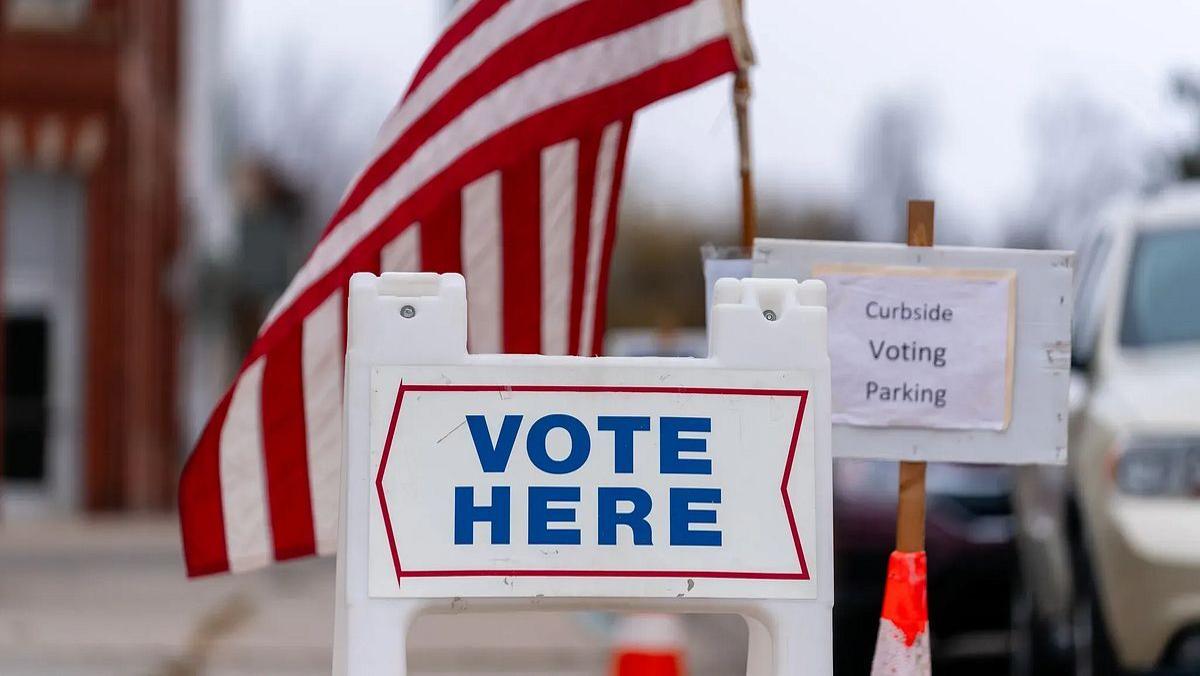
Early in-person voting started Monday of last week across South Carolina and runs through Saturday. Election Day is Nov. 3.
South Carolina is emblematic of the Deep South’s change from blue to red over the last half century. Pending on optimism and sourcing, Democrats believe the trend of the last half century can change this year.
The last Democrat to win the governor’s office, Jim Hodges in 1998, was also the last one-term governor. It’s all the way back to the 1978 and 1982 elections of Richard Wilson Riley to find the Democrat before Hodges.
That's a definitive turn from elections between 1868 and 1970. Over those 102 years, a Democrat won the governor’s race every time.
Republicans have also dominated statewide offices for more than a decade. And they've done so in districts.
Today's state Senate is 34-12 Republican majority, and the House of Representatives is 88-36 Republican majority. Republicans have had majorities for seven four-year cycles in the Senate, dating to 2000, and 16 two-year cycles in the House, dating to 1994.