
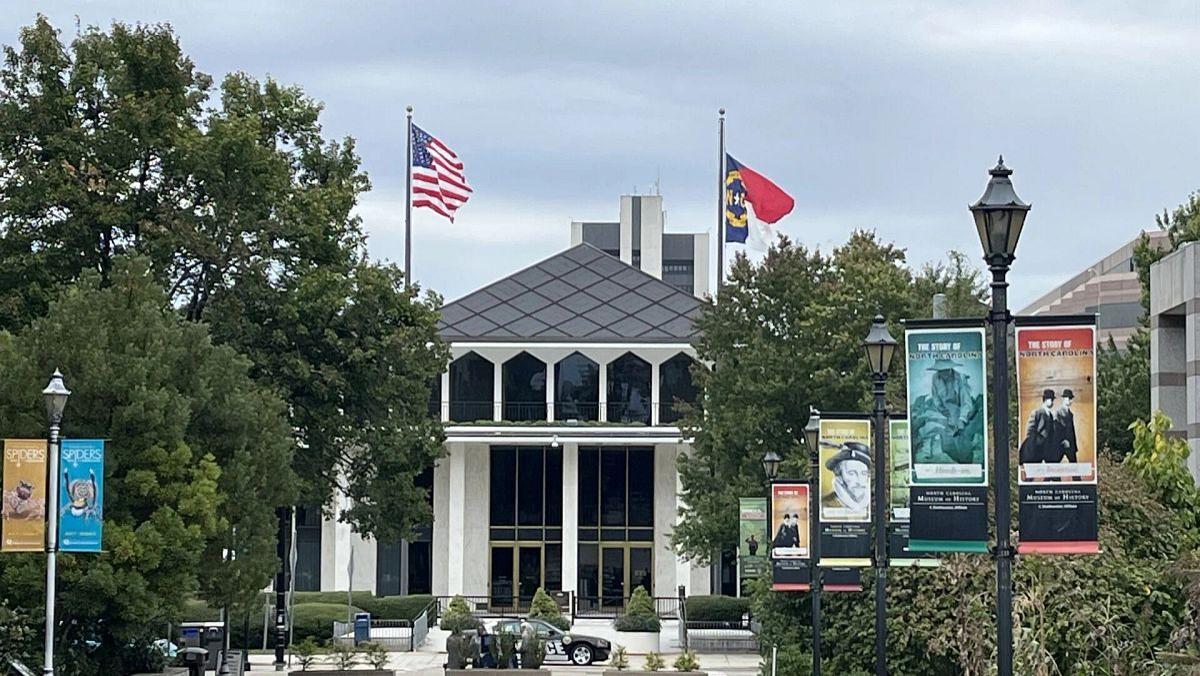
(The Center Square) – Democrats swept through North Carolina election races Tuesday, even to the brink of delivering the state as a blue trifecta should provisional ballots or a recount tip a close Senate race.
Ironically alongside that, conservative principles were overwhelmingly approved in three state constitutional amendments.
While the new leader of the House of Representatives is clear, the state Senate even if Republicans hang on to a majority is not.
Among the “what’s next” questions in North Carolina one day after the historic 2026 midterms:
Who will lead chambers?
Rep. Robert Reives, D-Chatham, has been minority leader in the House of Representatives and is expected to be the new speaker.
In the Senate, should Sen. Danny Britt, R-Robeson, prevail against Catina Hamm in a race with less than 300 votes separation, Republicans will have a 26-24 majority. Sens. Jim Burgin of Harnett County, Todd Johnson of Union County, Ralph Hise of Mitchell County and Brent Jackson of Sampson County are leading candidates with Sen. Phil Berger of Rockingham County already out following a primary loss in March and Sen. Michael Lee of New Hanover County out following a loss Tuesday.
Reives says affordability is the No. 1 priority in his chamber.
What policies change?
Voters in the constitutional amendment decisions – all garnering about 60% – said yes to requiring photo identification for all forms of voting, including absentee mail-in ballots; changing the constitution to lower the allowable state personal income tax rate from 7% to 3.5%; and allowing the General Assembly to limit increases in property taxes from local governments.
The individual income tax schedule could be in play. Republicans tweaked their plan in the last two-year session.
The state’s individual income tax is a flat rate of 3.99% and scheduled to continue dropping to 3.49% in 2027, 3.24% in 2030 and 2.99% in 2033. After 2034, revenue-triggered cuts could get it to 2.49%. The amendment puts a cap of 3.5% starting in 2027.
School choice and K-12 education in general is going to headline many discussions when the two-year state budget talks start in the spring. Choices by parents in addition to recent polls say North Carolina families like it far better than the collective of Democrats.
Republicans led the state into President Donald Trump’s federal school choice program in the summer, and in 2024 appropriated $463 million into the Opportunity Scholarship program to wipe out a waiting list of 55,000.
Pay raises for educators are traditionally higher when proposed by Democrats.
Long fought battles are expected for appointment power, healthcare costs inclusive of rules on Medicaid, and the environmental items such as the so-called green agenda.
When is it official?
Forgive everyone for remembering the 184 days it took for the 2024 state Supreme Court race between Democrat Allison Riggs and Republican Jefferson Griffin to go through the State Board of Elections decisions and stops at Wake County Superior Court, the state Court of Appeals, the state Supreme Court, and the 4th U.S. Circuit Court of Appeals.
County canvass happens Friday of next week, and the state canvass is Nov. 24.
Legal changes to vote totals can happen. Additions come from provisional ballots cast by eligible voters; absentee ballots that have been cured; and mailed military and overseas voters’ ballots received after Election Day but before 5 p.m. Nov. 12. Subtractions come from challenges to absentee ballots filed by voters, and county board administrative challenges to absentee and early voting ballots based on voter eligibility audits conducted by the State Board.
For a statewide ballot item, the difference between the winning candidate and the candidate requesting the recount is ½ of 1% (0.5%) of the votes cast in the ballot item, or 10,000 votes, whichever is fewer. For a nonstatewide ballot item, the difference between the winning candidate and the candidate requesting the recount is 1% or less of the total votes cast in the contest.
The deadline to request is 5 p.m. Nov. 16 for counties, and noon Nov. 17 for jurisdictions by the state board.
When does General Assembly meet?
This General Assembly has sessions convening Nov. 16. The bulk of the work has been done for this two-year session.
Legislators take office Jan. 1 and the swearing in ceremony is usually the second Wednesday of odd-numbered years – or Jan. 13. Leadership is elected, and adoption of rules also happen.
The first floor sessions are expected Jan. 27, with work in earnest happening in the spring ahead of crossover day. Except for budget and tax bills, proposals must pass from one chamber to the other ahead of crossover day to remain alive for the session. In 2025, it was May 8.
The first of the two years is considered the long session, and usually ends before August. The second year is called the short session, and often is handled prior to July 4.