
(The Center Square) – Two new laws will change how Californians get change.
Both laws will round cash transactions up – or down – the nearest five cents as the nation moves away from use of the penny.
One of those laws, Senate Bill 1005, introduced by Sen. Anna Caballero, D-Merced County, allows local government agencies to round cash transactions for fees, fines and bills to the closest five cents. If city and county government agencies opt to enact such a policy, taxpayers paying bills to a government agency could have their payment or refund rounded to the closest five cents. This means a payment for $10.08 could be rounded up to $10.10, according to a legislative analysis of the bill. SB 1005, which passed the Legislature and was signed by Gov. Gavin Newsom, is already in effect.
Caballero declined to comment for this story.
Assembly Bill 1793, introduced by Assemblymember Christopher Ward, D-San Diego, would do the same thing for businesses. This new law allows merchants to round up or down to the nearest five cents for cash transactions, and would not apply to purchases made by California customers’ debit cards, credit cards or electronic transactions, according to the bill analysis.
Ward told The Center Square via email on Thursday that his bill is not meant to generate additional tax revenue. This law will take effect in July 2027.
“AB 1793, the California Common Cents Act, is designed to provide a fair, practical approach to cash transactions as we move away from the penny,” Ward wrote. “By rounding transactions both up and down to the nearest five cents, the impact remains neutral for businesses and consumers. This is not a mechanism to generate additional revenue for businesses or the state.”
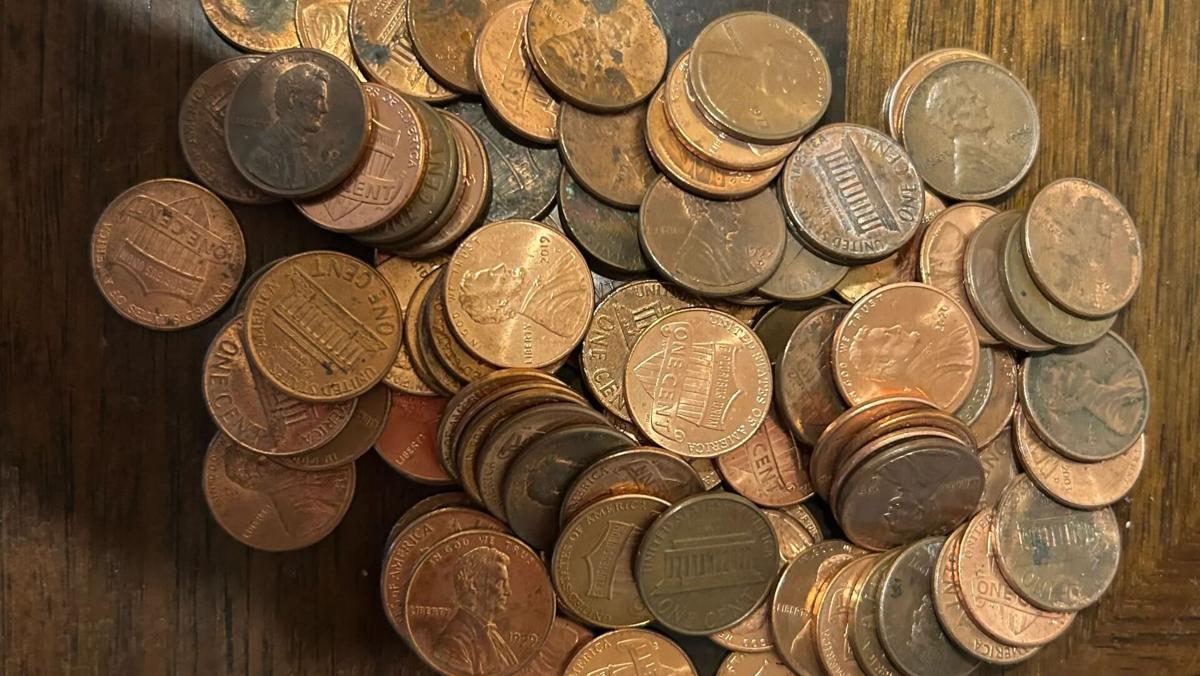
Both new laws are a response to the U.S. Treasury ceasing production of the penny, which cost more to make than their monetary value, according to legislative analyses of both bills. In the last 10 years, production of the penny has risen from 1.3 cents to 3.69 cents per penny, costing American taxpayers $56 million in immediate savings with the cessation of penny production, according to the U.S. Treasury.
The U.S. Treasury stopped producing pennies as of December 2025, and almost a year later, Americans are already experiencing a penny shortage. U.S. Treasury issued guidance late last year that merchants should round up or down to the nearest five cents for cash transactions, but that businesses should continue to accept pennies and provide pennies in change for cash transactions as long as pennies are in circulation. Non-cash transactions, including for payments made by debit card, credit card, or check should still be processed to the exact cent, according to U.S. Treasury.
There are still roughly 114 billion pennies in circulation, the U.S. Treasury reported.
“[California Department of Tax and Fee Administration] expects minimal impact from Assembly Bill 1793 on taxpayers,” Genette Brookshire, information officer for the department, told The Center Square via email on Thursday. “Assembly Bill 1793 reiterates the common practice of rounding cash transactions as the penny is phased out.”