
(The Center Square) - With six weeks until the Nov. 3 election, union backed campaign donations are pouring in for the “No on I-645” campaign.
The Washington Education Association tops campaign donations for the effort aimed at convincing voters to reject Initiative 645, to repeal the state's income tax.
The total spending for opponents of the repeal initiative is nearly $10 million.
According to the Public Disclosure Commission, WEA donated $3 million to the No on I-645 campaign. Just shy of $2 million has come from the Service Employees International Union and more than $1 million has been donated from the Washington Federation for State Employees.
"Washington state is among the wealthiest in the nation, yet many of our students' needs remain unmet, our districts are facing financial hardship, and some schools are slated for closure. That's because the ultra-rich are using their power to rig the tax system for themselves," reads a statement on the WEA website explaining its support for the tax.
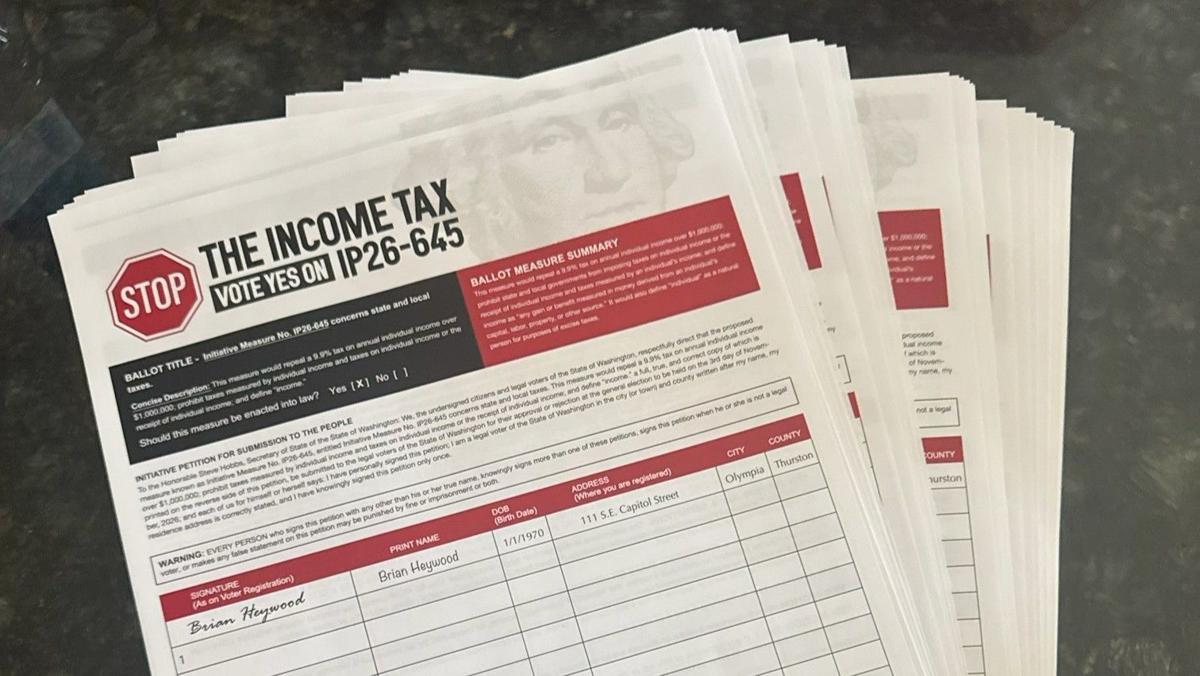
Backers of the Yes on I-645 campaign including Let’s Go Washington Founder Brian Heywood and Vote Yes Repeal the Income Tax have donated just shy of $5 million.
"The income tax is not just a tax on 'the rich'; it is a legal test case designed to open the door to a broader statewide income tax. Senator Jamie Pedersen communicated openly with the Attorney General’s Office about how to get the Washington Supreme Court to reconsider longstanding income-tax precedent, and sidestep voters to pass his unconstitutional tax," reads a statement on the LGW website explaining its support for the initiative to repeal the tax.
Call for correction
As the campaign intensifies, the free-market think tank Washington Policy Center has called on the Seattle Times Editorial Board to print a correction to their article urging readers to vote against I-645.
“Initiative 645 does more than take away the 9.9% tax on incomes over $1 million. It maintains a bevy of promised tax credits that, without the income tax to fund them, would dig an even deeper budget hole,” said the editorial.
“And it would prevent legislators from altering any of the initiative’s impacts for two years, absent a supermajority vote.”
Ryan Frost, WPC’s budget and policy center director, says the editorial board got it wrong.
“The board claims that leaving the relief provisions in place 'locks them in' and 'would prevent legislators from altering any of the initiative’s impacts for two years, absent a supermajority vote,'" wrote Frost. “They are incorrect.”
“I-645 simply asks voters to ban an income tax, not to guarantee every other provision that lawmakers attached to the flawed income tax bill.”
According to I-645, if voters agree to repeal the income tax, other tax benefits written into SB 6346 would remain intact, including an expansion of the Working Families Tax Credit, preserving tax relief for eligible low- and moderate-income working families.
The measure also protects future exemptions for household necessities such as grooming and hygiene products, diapers, and over-the-counter drugs, and provides small-business B&O relief, including the increased small-business tax credit and higher filing-relief threshold.
Frost notes that lawmakers could still amend or repeal the separate tax relief provisions by simple majority in 2027 or 2028.
“And even under the Times’ interpretation, the two-year window where they couldn’t come back and do anything if 645 passes, would expire Dec. 3, 2028 — before the tax relief takes effect...so either way you look at it, the Times Editorial Board got it wrong,” wrote Frost.
The Center Square reached out to the Seattle Times Editorial Board inquiring about Frost’s claims, but did not receive a response before publication.
Frost previously told The Center Square claims from opponents that repealing the income tax will decimate funding for education and healthcare are also inaccurate.
“The measure itself does not dedicate any revenue to K-12 education, and the measure does not dedicate any revenue to healthcare. The only specific allocation in the entire bill is for 5% of the revenues to go to the Fair Start For Kids account. The rest of the revenues go to the state’s general fund,” said Frost.
“The dirty little secret behind this is the state is already in a huge deficit and so these income tax revenues are not going to new programs…they’re going to backfill a budget hole," he said.
Frost said he is going to make a formal request for the Seattle Times Editorial Board to print a correction to their piece urging readers to reject I-645.